
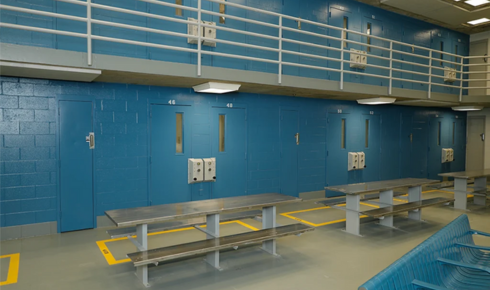
Correctional facilities rely on door systems that remain dependable under pressure, and those systems must meet far more than basic construction requirements. Each standard serves a specific purpose, shaping how detention doors perform during emergencies, daily use, and high-risk situations. Understanding these standards shows why advanced detention equipment remains a critical part of safe, secure facility design.
ASTM F1450 Certification for Impact and Static Load Resistance in Steel Doors
ASTM F1450 sets performance expectations for steel detention doors by measuring how well they hold up against heavy impact and sustained force. This certification evaluates the door’s ability to withstand repeated blows, pressure against the leaf, and structural abuse that can occur through attempted tampering. Meeting this standard indicates the door can maintain its integrity even under aggressive conditions inside correctional housing.
Beyond impact performance, ASTM F1450 also examines how the door frame, hinges, and welded seams carry load without bending or separating. Facilities using Cornerstone detention center doors benefit from steel assemblies built to preserve alignment and function after long-term stress. This level of performance is especially important for modular jails and retrofitted facilities where durability must remain consistent across varying layouts.
Compliance with UL 752 Ballistic Ratings for High-threat Security Areas
UL 752 ballistic ratings address resistance against firearm threats, offering a structured way to identify protective levels for different environments. Doors meeting these standards prevent penetration from specified calibers, ensuring that high-risk zones remain shielded from external or internal ballistic incidents. Facilities often choose a rating based on population type, housing classification, and threat assessments.
The construction required for UL 752 compliance includes reinforced steel cores, layered materials, and engineered hardware connections. These upgrades guard the internal locking mechanisms that would otherwise be vulnerable. State prisons, federal correctional wings, and specialized housing frequently rely on these ballistic protections, often sourced from Cornerstone prison supply manufacturers due to their proven consistency.
Forced Entry Protection Standards Defined by State and Federal Corrections
Forced entry standards outline how detention doors should resist manipulation, prying, tool use, and concentrated force. These guidelines are shaped by correctional authorities at multiple levels and ensure that doors cannot be bypassed through common tampering methods. Stronger welds, reinforced strike plates, and secure hinge placements all contribute to meeting these expectations.
Each jurisdiction may impose slightly different requirements, making compliance more complex than simply using “heavy steel.” Forced entry protection is evaluated through tests that simulate real-world scenarios rather than lab-only conditions. Cornerstone detention equipment contractors often design systems that exceed minimum requirements to ensure long-term stability under varied operational demands.
ASTM F1592 Standards for Multi-point Locking System Reliability and Strength
ASTM F1592 defines the performance requirements for detention-grade locking systems, focusing on multi-point engagement mechanisms. These locks must activate smoothly while delivering strong resistance against spreading, twisting, and concentrated pulling. The standard confirms that even under pressure, multiple locking points work together without failure.
The reliability of multi-point systems also depends on internal hardware strength. Components undergo cyclic tests, pressure tests, and alignment evaluations to prove ongoing performance. A compliant locking system reduces operational risks and supports secure day-to-day movement within correctional corridors.
Fire Safety Ratings That Meet NFPA 80 Requirements for Detention Enclosures
NFPA 80 governs fire-rating performance for door assemblies, ensuring they contain fire long enough for evacuation or suppression. Detention center doors tested under this standard must maintain structural integrity against extreme heat and pressure. Their fire-rated cores, reinforced frames, and approved hardware all contribute to life-safety compliance. Fire-rated detention doors also undergo inspections and maintenance requirements outlined in NFPA 80. These standards help facilities maintain readiness and ensure that safety features still perform years after installation. Using compliant products reduces liability and supports the protected movement of inmates and staff during emergency scenarios.
ASTM F1643 Standards for Door Assembly and Hardware Cyclical Testing
ASTM F1643 focuses on cyclical performance under repeated opening and closing—critical for high-traffic detention settings. Hardware such as hinges, pivots, locking components, and control mechanisms must endure thousands of cycles without significant wear. This testing simulates daily use in intake areas, corridors, and cell blocks.
Cyclical reliability matters because operational stress builds gradually. Doors that pass ASTM F1643 maintain smooth movement, predictable alignment, and consistent hardware action throughout long service cycles. These qualities support efficient facility operations and reduce repair frequency.
Detention-grade Hollow Metal Specs for Maximum Resistance to Tampering
Hollow metal detention doors differ dramatically from commercial-grade versions. Detention models use thicker gauges, reinforced edges, welded internal structures, and tamper-resistant seams. These specifications limit the ability to peel, pry, or puncture the door surface.
Internal stiffeners and welded-in reinforcement plates also contribute to the door’s strength. Tamper resistance remains one of the most important qualities for high-security areas, making the products sourced through a Cornerstone security detention equipment contractor valuable for facilities requiring dependable, abuse-resistant assemblies.
Acoustic Attenuation Standards to Manage Noise Levels in Housing Units
While strength receives the most attention, noise control is also essential in detention environments. Acoustic attenuation standards help manage noise transmission between cells, dayrooms, and administrative spaces. Reduced noise supports calmer housing units and improves communication clarity for officers.
Acoustic performance is achieved through internal insulation, specialized cores, and sealed frame designs. Lower noise transfer also protects privacy during medical consultations or classification meetings within secure zones.
ADA Accessibility Compliance Integrated into Secure Electronic Exit Paths
Accessible design must be incorporated into detention door assemblies without compromising safety. ADA requirements address reach ranges, clearances, and actuator placements for electronic exits. Detention-grade systems must satisfy these guidelines while maintaining strict control features.
Integrating accessibility with security requires careful coordination of electronics, locking hardware, and control systems. Facilities working with Cornerstone receive support in designing ADA-compliant exit paths that still meet detention security standards, ensuring safe and functional movement for all occupants.